Available through:
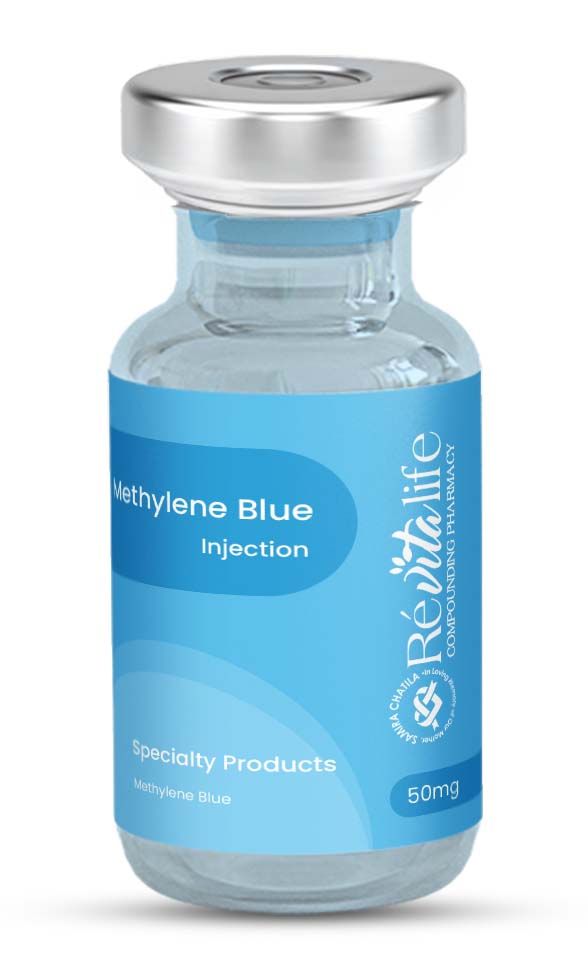
Methylene Blue Injection
Available Dosage Strengths
About Methylene Blue Injection
Methylene blue (MB) has been explored as a mitochondrial support therapy because of its unique ability to act as an alternative electron carrier in the mitochondrial electron transport chain (ETC).
Primary Mechanism in Mitochondrial Support:
MB can accept electrons from NADH and directly donate them to cytochrome c, bypassing dysfunctional Complex I or III. This maintains ATP generation in cells with impaired oxidative phosphorylation.
Potenial Roles
1.Improves mitochondrial function and respiration via the electron transport chain 2.Improves O2 consumption, ATP production, and glucose consumption.
3.Decreases lactic acid production
4.Behaves as an antioxidant
5.Interferes with the infectivity and lifecycle of viruses, parasites, bacteria, and fungi (including E. coli, Candida, hepatitis, HIV, among others)
6.Alternative Electron Carrier: Keeps ETC partially functional even when Complex I or III are impaired.
7.Antioxidant Effects: In low doses, MB can reduce superoxide production. 8.Neuroprotective Action: Enhances mitochondrial function in neurons, possibly improving cognitive and motor performance.
Indications
Methemoglobinemia
Off-Label Uses:
Primary mitochondrial myopathies
Parkinson’s disease (mitochondrial component)
Alzheimer’s disease and other dementias
Chronic fatigue syndrome / myalgic encephalomyelitis
Cyanide poisoning–related mitochondrial inhibition
Dosage
LOW-DOSE RANGE:
0.5–4 mg/kg intravenously over 30–60 minutes, with the dose repeated based on clinical response. An oral alternative has been used in some studies: 0.5–2 mg/kg/day (small doses) to reduce oxidative stress.
KEY POINT:
Important! Higher doses are not always better. Why? Methylene blue exhibits a controlled response, showing different effects at lower than higher doses. At lower doses, methylene blue can bypass blocked mitochondrial compartments, improve ATP production, and reduce reactive oxygen species (ROS). At higher doses, it may cause oxidative stress—therefore, careful dosing and monitoring are essential.
Safety Considerations Contraindicated in:
G6PD deficiency (risk of hemolysis) Concomitant serotonergic medications (risk of serotonin syndrome) Pregnancy unless life-saving
Adverse Effects:
Blue/green urine or skin discoloration (transient) Nausea, dizziness, mild headache High doses → paradoxical oxidative stress, hemolysis
Referances
https://www.accessdata.fda.gov/drugsatfda_docs/label/2024/204630s021lbl.p df?utm_source https://www.ncbi.nlm.nih.gov/books/NBK557593 https://www.health.harvard.edu/diseases-and-conditions/what-to-knowabout-methylene-blue https://www.webmd.com/a-to-z-guides/methylene-blue?