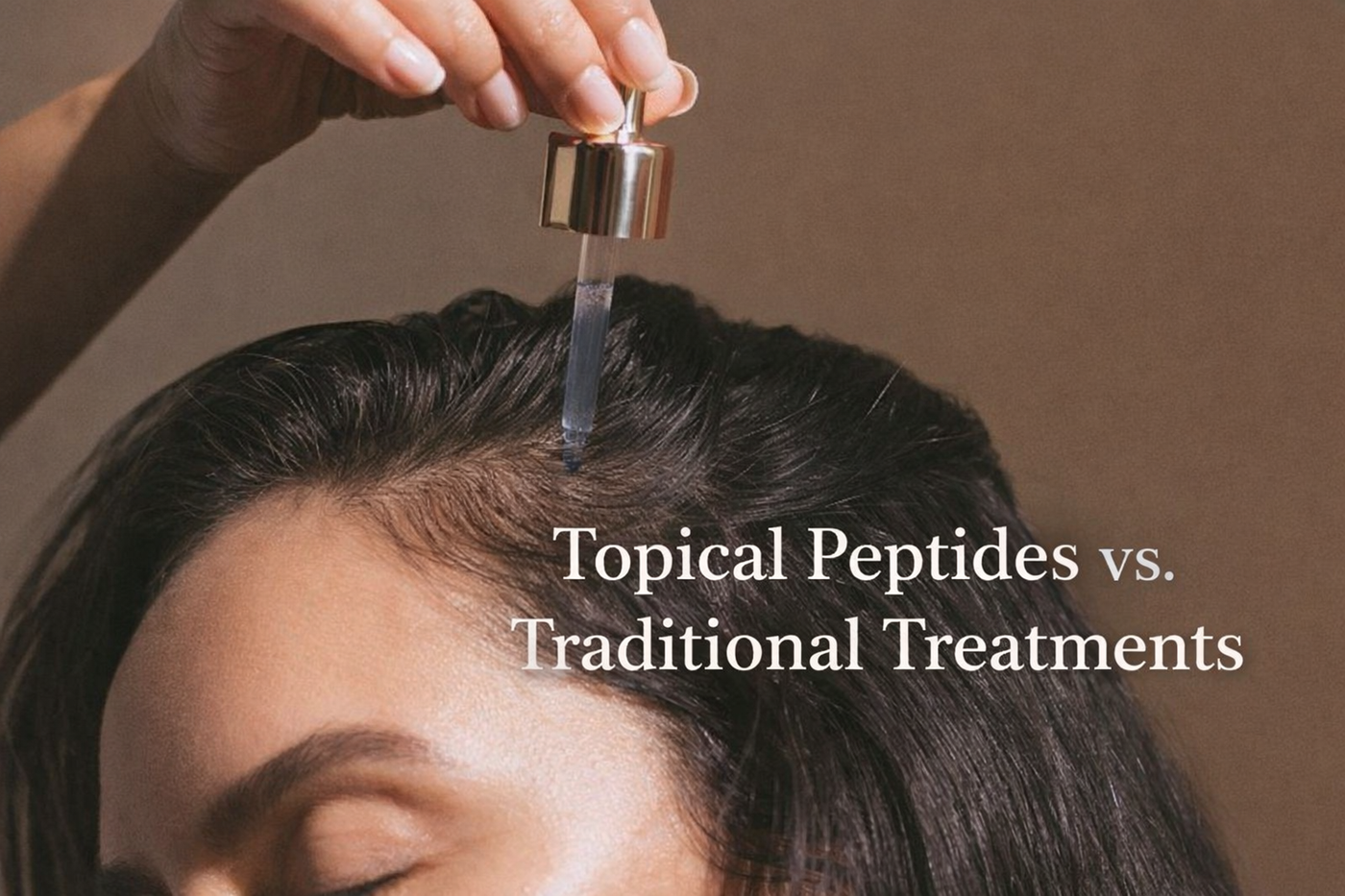
The landscape of hair restoration is shifting. While traditional pharmaceuticals have dominated the market for decades, a new generation of non-hormonal solutions is gaining traction among those seeking effective results without systemic side effects. Leading this charge is GHK-Cu, a copper peptide that is redefining how we approach scalp health and follicular vitality.
At Revita Life Pharmacy, we believe in providing science-backed alternatives that cater to the unique physiological needs of every patient. Understanding the distinction between GHK-Cu and traditional treatments is the first step toward a personalized hair restoration journey.
The Traditional Benchmarks: How They Work
To understand why GHK-Cu is emerging as a preferred alternative, we must first look at the mechanisms of established therapies:
- Minoxidil: This vasodilator works by opening ATP-sensitive potassium channels in the vascular smooth muscle of the scalp. To be effective, it must be converted by scalp enzymes into minoxidil sulfate. This process increases blood flow to the hair follicles, providing them with more oxygen and nutrients to prolong the growth (anagen) phase.
- Finasteride: This treatment targets the hormonal drivers of hair loss. It acts as a competitive inhibitor of the 5-alpha-reductase type II enzyme, preventing the conversion of testosterone into dihydrotestosterone (DHT). While highly effective at stopping follicle miniaturization, its hormonal nature can be a concern for many users.
The GHK-Cu Difference: A Non-Hormonal Powerhouse
GHK-Cu (Glycyl-L-histidyl-L-lysine copper) is a naturally occurring copper complex that operates through biological signaling rather than hormonal suppression.
1. Promoting Healthy Scalp Ecosystems
Unlike traditional treatments that focus solely on the follicle, GHK-Cu improves the overall “soil” of the scalp. It stimulates the production of collagen and elastin, strengthening the extracellular matrix that supports hair follicles.
2. Angiogenesis and Nutrient Delivery
Research suggests that copper peptides can stimulate the growth of new blood vessels (angiogenesis). This mimics the benefits of minoxidil by ensuring the follicle is well-nourished, but through a different biological pathway that doesn’t rely on the same enzymatic conversion.
3. Anti-Inflammatory Properties
Chronic micro-inflammation is often a silent contributor to hair thinning. GHK-Cu is known for its potent anti-inflammatory effects, soothing the scalp and protecting follicles from the oxidative stress that can lead to premature shedding.
Performance Without the Systemic Trade-offs
One of the most compelling reasons for the emergence of GHK-Cu is its safety profile. Because it is non-hormonal, it does not carry the risk of systemic side effects often associated with DHT inhibitors, such as changes in libido or mood.
Furthermore, while minoxidil can occasionally cause scalp irritation or reflex tachycardia in sensitive individuals, copper peptides are generally well-tolerated and can even improve the skin barrier of the scalp. Research has indicated that the hair-growth performance of copper peptides can be comparable to traditional treatments, making it a viable primary therapy for those who are hormone-sensitive.
Why Choose Peptides?
- Non-Hormonal: No interference with testosterone or DHT levels.
- Dual Action: Promotes both follicle growth and scalp skin health.
- Minimal Side Effects: Ideal for those with sensitive skin or cardiovascular concerns.
Start Your Hair Restoration Journey with Revita Life Pharmacy
Choosing the right treatment requires a balance of efficacy and lifestyle compatibility. Whether you are looking for a standalone non-hormonal solution or a synergistic addition to your current regimen, GHK-Cu offers a modern, peptide-based approach to hair health.
Ready to explore the benefits of copper peptides? Consult with our expert pharmacists at Revita Life Pharmacy to learn more about our specialized compounded hair care solutions.
Shop Our Hair Restoration Collection