Available through:
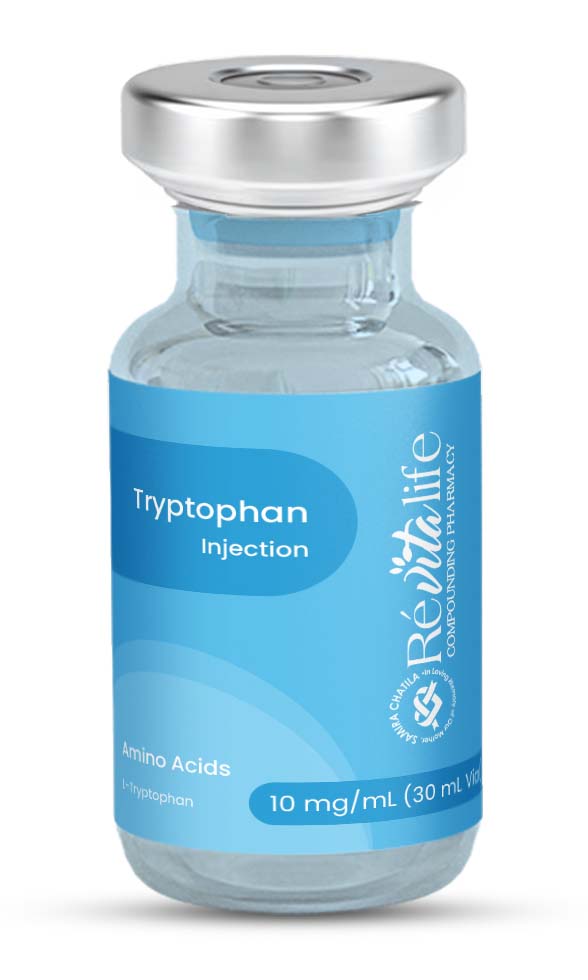
Tryptophan Injection
Available Dosage Strengths
About Tryptophan Injection
Generic Name:
L-Tryptophan (administered IV only as part of amino-acid solutions used for parenteral nutrition)
Pharmacological Class:
Essential aromatic amino acid; precursor to serotonin, melatonin, niacin, and kynurenine pathway metabolites.
Clinical Use:
Provided intravenously to prevent or treat tryptophan deficiency in patients unable to receive enteral nutrition, including:
- Critically ill patients requiring Total Parenteral Nutrition (TPN)
- Major surgery, trauma, burns
- Severe malabsorption
- Prolonged NPO status
- Short bowel syndrome
Rationale:
Tryptophan is required for:
- Protein synthesis
- Neurotransmitter synthesis (serotonin)
- Immune function
- Maintenance of nitrogen balance
- Production of niacin via the kynurenine pathway
Dosage
Important:
Tryptophan is not dosed individually as an IV injection. It is supplied only within balanced PN amino-acid solutions.
Therefore dosing is based on total amino acid requirement, not tryptophan alone.
Adult Parenteral Nutrition Requirements (General):
- Typical PN amino-acid dose: 8–1.5 g/kg/day
- Higher needs in burns, trauma, catabolic illness: up to 0–2.5 g/kg/day
Within standard PN solutions, tryptophan content is ~1–1.4% of total amino acids.
Approximate Delivered Tryptophan (from standard AA solutions):
- 13–20 mg/kg/day (approximate; varies by manufacturer)
Method of Administration:
- Administer only as part of continuous IV infusion via central or peripheral PN protocols.
- Never administer IV tryptophan as a bolus or standalone infusion.
Individualized Dosing:
Requires consideration of:
- Renal/hepatic function
- Nitrogen balance goals
- Metabolic rate and catabolism
- Electrolyte status
- Fluid restrictions
Precise dosing must be calculated by a licensed prescriber within a medically supervised nutrition-support program.
Mechanisms of Action
Protein & Tissue Synthesis
- Tryptophan is an essential amino acid incorporated into structural proteins, enzymes, and hormones.
- Supports muscle protein synthesis, wound healing, and nitrogen balance.
Serotonin Synthesis
Tryptophan → 5-Hydroxytryptophan (5-HTP) → Serotonin (5-HT)
Roles:
- Modulation of mood
- Gastrointestinal motility
- Platelet aggregation
- Sleep regulation
Melatonin Synthesis
Serotonin → N-Acetyl serotonin → Melatonin
Supports circadian rhythm and sleep physiology.
Niacin (Vitamin B3) Production
Tryptophan → Kynurenine → Niacin
Contributes to NAD/NADP synthesis, essential for cellular energy metabolism.
Kynurenine Pathway Functions
- Immune regulation
- Neuroprotection and neuroinflammation balance
- Modulation of oxidative stress pathways
Immune System
Tryptophan availability affects:
- T-cell proliferation
- IDO (indoleamine 2,3-dioxygenase) activity
Inflammatory cytokine regulation
Contraindications & Precautions
Absolute Contraindications
- Known hypersensitivity to any component of amino-acid PN solutions
- Inborn errors of amino-acid metabolism
- Severe hepatic encephalopathy (risk of elevated aromatic amino acids)
- Acute shock or severe hemodynamic instability (relative contraindication to PN)
Relative Contraindications & Conditions Requiring Caution
- Renal impairment (risk of azotemia if protein load excessive)
- Pre-existing serotonin syndrome risk (e.g., patient taking serotonergic medication)
- Uncontrolled sepsis (nutritional support may need adjustment)
- Severe metabolic acidosis
- Hypertryptophanemia disorders (rare)
Clinical Monitoring Required
- Serum electrolytes
- Renal/liver function
- Triglycerides (if PN contains lipids)
- Ammonia levels (especially in hepatic dysfunction)
- Blood glucose
- Nitrogen balance
Interactions
Pharmacologic Interactions
Serotonergic drugs:
- SSRIs, SNRIs, MAOIs, tricyclic antidepressants
- Tramadol
- Linezolid
- MDMA
- 5-HTP supplements
→ Excess tryptophan availability may elevate serotonin levels and increase the risk of serotonin syndrome, though this is rare with PN-level dosing.
Corticosteroids:
- Can enhance protein breakdown → alters amino-acid utilization.
Levodopa:
- Competition at transport sites may reduce levodopa uptake (clinically mild during PN).
B. Laboratory Interference
- May influence serotonin and kynurenine measurements.
- Can alter tryptophan/large neutral amino acid ratio, affecting neurotransmitter synthesis studies.
Adverse Reactions / Side Effects
Because tryptophan is not given alone, adverse effects reflect total PN formulation and patient metabolic state.
Common (Mild)
- Nausea
- Vomiting
- Headache
- Gastrointestinal discomfort (from metabolic effects of PN)
Metabolic Effects
- Hyperammonemia (especially in hepatic insufficiency)
- Elevated BUN/creatinine
- Electrolyte disturbances
- Hyperglycemia (from PN carbohydrates)
Neurological Effects
- Sedation, somnolence (rare)
- Agitation or confusion if serotonin levels shift (rare)
Serious / Rare
- Serotonin syndrome (primarily when concurrent SSRIs/SNRIs/MAOIs used)
- Allergic or anaphylactoid reactions to PN components
- Infection or thrombosis related to central venous catheter
- Refeeding syndrome (phosphate, magnesium, potassium shifts
Pregnancy & Breastfeeding
Pregnancy
- Tryptophan is a normal part of protein metabolism and is considered safe when administered as part of medically indicated PN.
- PN use in pregnancy should be carefully monitored due to metabolic demands and fluid balance.
Breastfeeding
- Tryptophan is naturally present in breast milk.
- PN containing tryptophan is generally acceptable during lactation if clinically necessary.
- Monitor infants for unusual sedation only as a precaution.
Storage
Storage Conditions for Amino-Acid PN Solutions Containing Tryptophan
- Store between 20–25°C (68–77°F).
- Protect from excessive heat or freezing.
- Keep in original packaging until use.
- If added to a PN admixture:
- Refrigerate at 2–8°C.
- Use within 24 hours of preparation once removed from refrigeration.
Compatibility
- Compatible with most PN ingredients (lipids, electrolytes, vitamins) following manufacturer guidelines.
- Follow institution-specific PN compounding and stability standards.
References
- ASPEN (American Society for Parenteral and Enteral Nutrition) Clinical Guidelines for Parenteral Nutrition.
- ESPEN Guidelines on Parenteral Nutrition in Intensive Care.
- Young VR. “Adult amino acid requirements: implications for parenteral nutrition.” Clin Nutr.
- Fernstrom JD. “Tryptophan metabolism and brain function.” J Nutr.
- Parenteral Nutrition Handbook – ASHP.
- Manufacturer labeling for commercial amino-acid injection products (e.g., Aminosyn®, Clinisol®, Primene®).
- Wurtman RJ, Fernstrom M. “Control of brain monoamine synthesis by precursor availability.” Am J Clin Nutr.
- Calder PC, et al. “Proteins and amino acids in nutrition support.”