Available through:
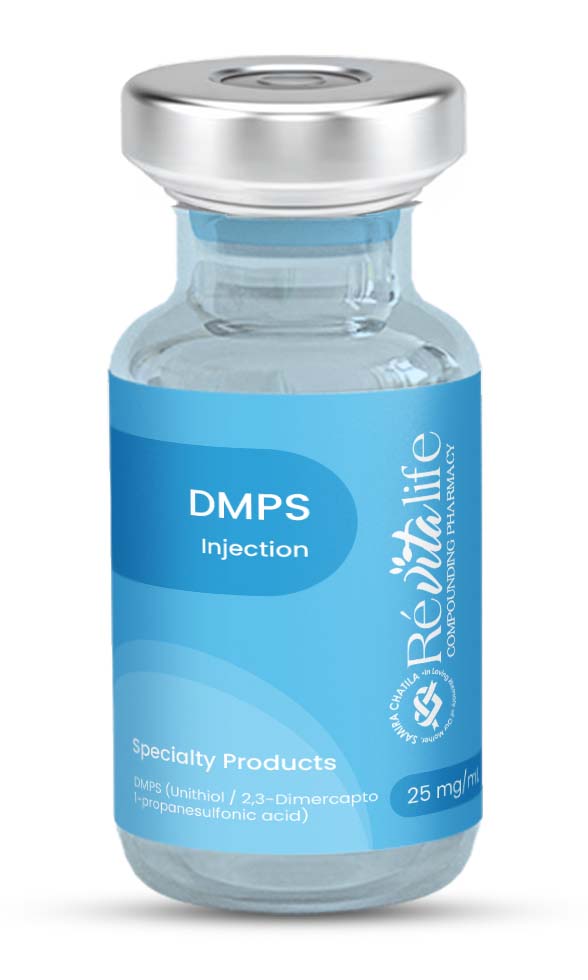
DMPS Injection
Available Dosage Strengths
about DMPS Injection
Generic Name: Dimercapto-1-propanesulfonic acid
Common Name: DMPS
Brand Names: Dimaval®, Unithiol (varies by country)
Drug Class: Chelating agent; antidote for heavy metal poisoning
Approved Routes in Some Countries:
- IV (intravenous)
- IM (intramuscular)
- Oral (less effective)
FDA status (U.S.): Investigational; may be used under physician guidance, especially in toxicology settings.
Primary Clinical Indications (Medically Recognized):
- Acute inorganic mercury poisoning
- Arsenic poisoning
- Lead poisoning (second-line after CaNa₂-EDTA; varies by guidelines)
- Heavy metal absorption after industrial/toxic exposures
Non-approved uses:
- “Detoxification” in wellness clinics
- Chronic fatigue, autoimmune disorders, general anti-aging
(These uses lack evidence and may be unsafe.)
Dosage
DMPS dosing is highly individualized, based on:
- Type of heavy metal
- Severity of poisoning
- Renal function
- Timing of exposure
Note: The following reflects literature-cited clinically used ranges, not instructions. Actual administration must follow specialist toxicology protocols.
A. Acute Mercury or Arsenic Poisoning (IV use)
Published toxicology references describe:
- 250–500 mg IV per dose for adults, repeated at intervals depending on severity
- Typical intervals: every 6–12 hours in acute poisoning, then tapering
Pediatric doses vary and must be weight-based and specialist-determined.
B. Lead Poisoning
- Generally considered second-line behind EDTA.
- Dosage varies widely; specialist consultation required.
Important Clinical Caveats
- Rapid IV administration increases risk of hypotension.
- Must avoid chelation in patients with unknown G6PD status or significant renal impairment.
- Treatment duration varies (often days to weeks).
Mechanisms of Action
A. Strong Dithiol Chelating Agent
DMPS contains two thiol (-SH) groups capable of binding divalent and trivalent metal ions, forming stable, water-soluble complexes.
B. Enhanced Renal Excretion
The metal-DMPS complexes are primarily excreted through the kidneys, increasing elimination of:
- Hg²⁺ (mercuric ions)
- As³⁺
- Pb²⁺ (less strongly than EDTA)
- Other soft metal ions
C. Higher Water Solubility Compared to DMSA
This makes DMPS suitable for IV use, with faster onset in emergency toxicology.
D. Does Not Cross the Blood–Brain Barrier Well
Thus, DMPS primarily chelates metals in plasma and soft tissues—not CNS stores.
E. Lower Risk of Metal Redistribution
Compared to some chelators, DMPS tends to cause less shifting of metals into more sensitive tissues, though this risk is not eliminated.
Contraindications & Precautions
Absolute Contraindications
- Known hypersensitivity to DMPS or sulfur-containing chelators
- Severe renal impairment (risk of accumulation and toxicity)
- History of Stevens-Johnson syndrome from sulfur-related drugs
- Uncontrolled asthma or severe atopy (higher risk of anaphylactic reactions)
Relative Contraindications
- G6PD deficiency (risk of hemolysis)
- Pregnancy (unless life-saving toxicology situation)
- Breastfeeding
- Cardiovascular instability
Toxicology-Specific Precautions
- Must ensure adequate hydration and renal perfusion
- Must monitor urine output, creatinine, BUN
- Correct electrolyte abnormalities
- Use caution in patients with metal implants (low risk but theoretical binding)
IV-Specific Precautions
- Infuse under monitoring (BP, HR, respiratory status)
- Avoid rapid bolus
- Use sterile pharmaceutical-grade DMPS only
Interactions
A. Mineral/Electrolyte Interactions
DMPS may non-selectively chelate essential minerals in trace amounts:
- Zinc
- Copper
- Selenium
- Chromium
Prolonged or high-dose therapy can cause micronutrient depletion.
B. Concomitant Chelation Agents
When combined with other chelators (EDTA, DMSA):
- Risk of electrolyte imbalance increases
- Renal burden increases
- Combined therapy only under specialist direction
C. Drugs Eliminated Renally
DMPS chelation can alter renal clearance:
- Certain antibiotics
- Lithium
- Some antihypertensives
Require monitoring.
D. Antioxidants
High-dose antioxidants may alter redox status and theoretically interact with chelation, though data is limited.
Adverse Reactions / Side Effects
Common (usually mild and self-limited):
- Flushing
- Headache
- Fatigue
- Nausea
- Metallic taste
- Injection-site pain (IV or IM)
- Rash or pruritus
Moderate:
- Hypotension during IV infusion
- Diarrhea
- Dizziness
- Transient increases in liver enzymes
- Allergic reactions (urticaria)
Serious (require immediate discontinuation):
A. Anaphylactoid Reactions
- Bronchospasm
- Hypotension
- Angioedema
- Acute respiratory distress
Higher risk in patients with multiple allergies or asthma.
B. Stevens-Johnson Syndrome / Toxic Epidermal Necrolysis
Rare but reported.
C. Renal Injury
Because chelated metals are excreted renally, there is risk of:
- Acute tubular necrosis
- Worsening renal insufficiency
D. Electrolyte Disturbances
- Low zinc
- Low copper
- Changes in calcium/magnesium (rare)
E. Metal Redistribution
If not administered properly, may mobilize metals from tissues into circulation.
Pregnancy & Breastfeeding
Pregnancy
- Limited data
- Animal studies suggest potential developmental risk
- Should be used only in life-threatening heavy metal poisoning
- Benefits must clearly outweigh risks
Breastfeeding
- Unknown if excreted in breast milk
- Many heavy metals are excreted in milk; chelation may increase or decrease this
- Most toxicology guidelines recommend withholding breastfeeding during active chelation therapy
Storage
- Store at 20–25°C (68–77°F)
- Protect from light
- Do not freeze
- Use only sterile, pharmaceutical-grade solutions for injection
- Inspect visually for particulate matter or discoloration before use
- Once opened, vials should be used promptly (single-dose standards vary by manufacturer)
References
(General standard medical references; no web browsing used.)
- Aposhian HV. DMSA and DMPS—Chelating Agents for Heavy Metal Poisoning. Clinical Toxicology.
- Barceloux DG, et al. American Academy of Clinical Toxicology Practice Guidelines for Chelation Therapy.
- Kosnett MJ. Heavy Metal Intoxication and Chelators. In: Goldfrank’s Toxicologic Emergencies.
- WHO Chemical Safety Guidelines.
- European Medicines Agency monographs on dimercaptopropanesulfonic acid.