Available through:
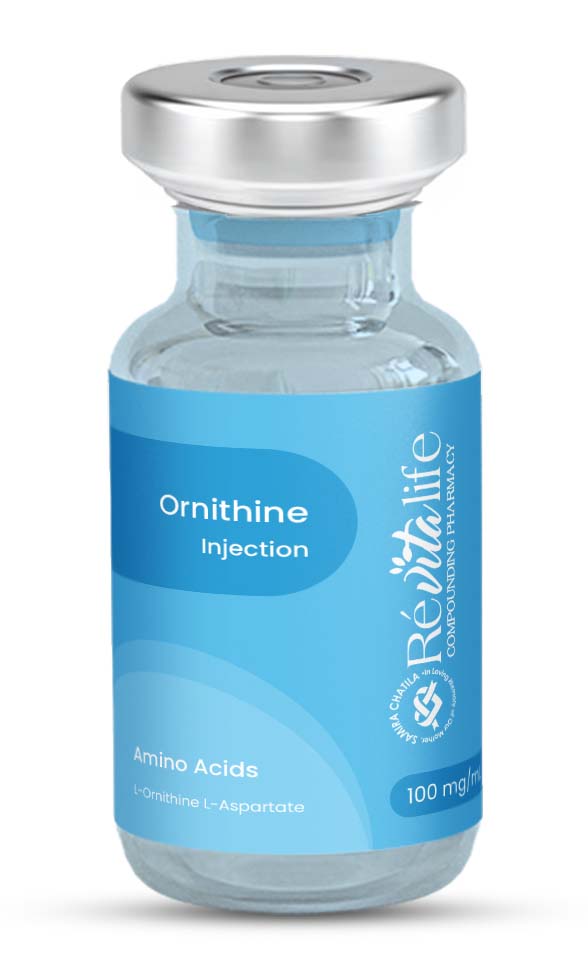
Ornithine Injection
Available Dosage Strengths
About Ornithine Injection
Generic Name: L-Ornithine (commonly available clinically as L-Ornithine-L-Aspartate [LOLA])
Drug Class: Non-proteinogenic amino acid; urea-cycle intermediate; ammonia-detoxification agent.
Route of Administration: Intravenous (IV).
Pharmaceutical Form:
- Injectable solutions of L-Ornithine L-Aspartate (large-volume infusion 5–20 g).
- Ornithine as a pure amino acid is rarely formulated alone for IV use; instead, LOLA is the standard.
Therapeutic Uses:
- Treatment of hyperammonemia
- Hepatic encephalopathy (acute or chronic)
- Support of ammonia detoxification pathways in liver dysfunction
- Adjunct therapy in severe hepatic insufficiency
- Experimental use in wound healing and metabolic support (non-standard)
Ornithine is NOT included in standard PN amino-acid mixtures.
Dosage
A. Standard Adult Dosing (for IV Ornithine-L-Aspartate)
- 20–40 grams/day IV infusion, typically in 500–1000 mL
- Administered over 4–24 hours, depending on clinical severity
- Used for hyperammonemia or hepatic encephalopathy grades I–III
B. Higher-Severity Cases
- Severe encephalopathy may require up to 30–40 g/day continuous infusion, monitored in ICU.
C. Administration Guidelines
- Infuse via peripheral or central line depending on osmolarity
- Do not administer as IV push
- Monitor neurological status and serum ammonia levels
- Use continuous infusion to avoid fluctuations
D. Adjustments in Special Populations
- Renal impairment: Use caution; metabolites (urea/ornithine cycle intermediates) may accumulate.
Severe hepatic failure: Dose may be increased for ammonia clearance but requires strict monitoring.
Mechanisms of Action
L-Ornithine plays key roles in ammonia detoxification and metabolic homeostasis:
A. Urea Cycle Substrate (Primary Mechanism)
Ornithine is required for the entry of ammonia into the urea cycle:
- Ornithine + Carbamoyl phosphate → Citrulline
- Citrulline → Argininosuccinate → Arginine → Urea + Ornithine (regenerated)
This mechanism:
- Reduces blood ammonia
- Supports detoxification in liver dysfunction
- Prevents neurotoxicity from hyperammonemia
B. Glutamine Synthesis Pathway Support
Ornithine stimulates conversion of ammonia to glutamine in peripheral tissues:
- Especially in skeletal muscle
- Reduces circulating ammonia load delivered to the brain
C. Mitochondrial Function and Energy Metabolism
Ornithine supports:
- TCA cycle intermediates
- Improved hepatic mitochondrial function
- Enhanced ammonia clearance at hepatocyte level
D. Collagen Synthesis (Indirect)
Through the conversion of ornithine → proline, there is a role in:
- Wound healing
- Tissue repair
- Fibroblast activity
E. Growth Hormone Stimulation (Theoretical / Limited Evidence)
High oral doses increase GH secretion; relevance for IV forms is minimal clinically.
Contraindications & Precautions
Absolute Contraindications
- Severe renal insufficiency
- Risk of accumulation of metabolites (urea, glutamine)
- Known hypersensitivity to ornithine, aspartate, or formulation components
- Metabolic disorders of the urea cycle
- OTC deficiency
- CPS1 deficiency
(Ornithine will not correct underlying defects and may worsen metabolic instability)
Relative Contraindications
- Severe dehydration or hypovolemia – risk of worsened hyperammonemia
- Respiratory alkalosis – urea cycle substrate changes
- Advanced hepatic coma grade IV – limited efficacy at critical stage
- Electrolyte abnormalities (especially hypokalemia or alkalosis)
Monitoring Requirements
- Serum ammonia
- Liver function tests
- Mental status / encephalopathy staging
- Serum electrolytes
- Renal function
- Acid–base balance
Blood urea nitrogen (BUN)
Interactions
Drug Interactions
- Lactulose – synergistic ammonia-lowering effect (beneficial, not harmful)
- Rifaximin / Neomycin – used together for encephalopathy; no negative interaction
- Corticosteroids – may impair ammonia detoxification, requiring dose adjustments
- Valproic acid – worsens hyperammonemia; ornithine may partially counteract
- Protein loads (TPN) – may increase ammonia; require increased monitoring when ornithine is used
Nutritional / Metabolic Interactions
- Low carbohydrate intake increases endogenous ammonia → may increase ornithine requirements
- Zinc deficiency may impair urea cycle enzyme function (especially OTC)
Adverse Reactions / Side Effects
Common
- Nausea
- Vomiting
- Abdominal discomfort
- Mild hypotension during infusion
- Sweating or warmth sensation
- Local infusion site irritation
Metabolic Effects
- Reduced ammonia levels (therapeutic)
- Possible mild alkalosis due to increased urea cycle activity
- Increased BUN as urea excretion rises
- Rare occurrences of:
- Hypernatremia
- Hyperchloremia
Rare / Severe
- Allergic reaction
- Confusion or worsening encephalopathy (if underlying pathology worsens)
- Renal overload with high-dose use
- Pulmonary edema in volume-sensitive patients (heart failure, cirrhosis with ascites)
PREGNANCY & BREASTFEEDING
Pregnancy
- No evidence of teratogenicity at therapeutic doses
- Should only be used if benefits outweigh risks (e.g., severe hyperammonemia)
- Monitor ammonia levels very closely
- Avoid high-dose prolonged therapy without metabolic consultation
Breastfeeding
- No known harmful excretion into breast milk at standard doses
- Generally considered safe when required for maternal treatment
Monitor maternal liver function and ammonia clearance
Storage
For IV Ornithine / Ornithine-Aspartate Solutions:
- Temperature: 20–25°C (68–77°F)
- Do not freeze
- Protect from excessive heat
- Store in original packaging
- Inspect visually for:
- Cloudiness
- Precipitation
- Discoloration
- Container integrity
- Use aseptic technique during preparation
- Follow institutional policies for beyond-use dating once opened
References
(Professional medical and pharmacological sources—no URLs)
- European Association for the Study of the Liver (EASL): Guidelines on the Management of Hepatic Encephalopathy.
- ASPEN: Clinical Guidelines for Parenteral Nutrition.
- Fischer CP, Baldus WP. Pharmacology of L-Ornithine-L-Aspartate in Hyperammonemia.
- Textbook of Hepatology – Ammonia Metabolism & Urea Cycle.
- S. Pharmacopeia (USP) – Amino Acid Injection Standards.
- Basic Medical Biochemistry – Urea Cycle and Amino Acid Metabolism.
- Pharmacology Resources on LOLA for Hepatic Encephalopathy (peer-reviewed literature).