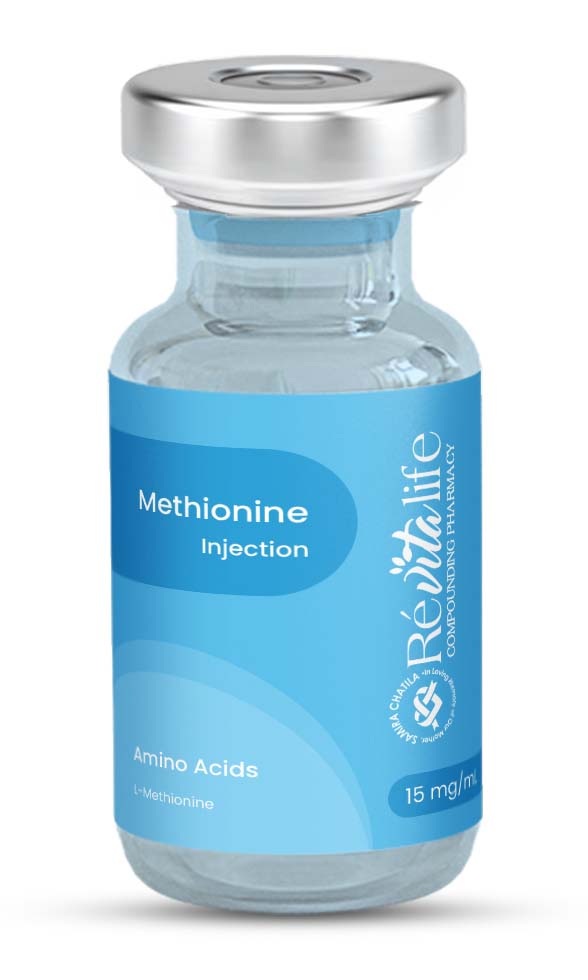
Methionine Injection from RevitaLife Compounding Pharmacy

Available through:

Methionine Injection

Available Dosage Strengths
L-Methionine
15 mg/mL

Generic Name:

L-Methionine (Essential Sulfur-Containing Amino Acid)

Pharmacologic Class:

Essential amino acid; methyl donor; precursor to S-adenosyl-methionine (SAMe), cysteine, glutathione, and taurine.

Clinical Use:

Methionine is supplied intravenously as part of balanced amino-acid formulations for parenteral nutrition in patients who cannot meet needs enterally, including:

  • Critical illness
  • Post-operative patients
  • Trauma, burns, sepsis
  • Short bowel syndrome
  • Severe malabsorption
  • Prolonged NPO status
  • Failure of enteral feeding

Physiologic Roles:

  • Protein synthesis and nitrogen balance
  • Methylation reactions (via SAMe)
  • Glutathione production (detoxification, antioxidant function)
  • Cysteine and taurine synthesis

Support of liver function and lipoprotein metabolism

Methionine is NOT separately dosed in IV form.
It is automatically included within standard PN amino-acid solutions.

A. Total Amino Acid Requirements

(Where methionine is included as a fixed proportion)

  • General adult PN: 8–1.5 g amino acids/kg/day
  • High catabolic states (trauma/burn/sepsis): 5–2.5 g/kg/day

Commercial PN solutions typically contain ~2–4% methionine of total amino acids.

Approximate Delivered Methionine

  • 15–40 mg/kg/day depending on PN formula

Administration Guidelines

  • Infused continuously via central (preferred) or peripheral line
  • NEVER given as IV bolus or standalone injection
  • Dosage individualized based on:
    • Renal/hepatic function
    • Nitrogen balance
    • Catabolic state
    • Fluid restrictions
    • Electrolytes and acid-base status

Final dosing must be determined by a licensed medical professional within a PN protocol.
A. Protein Synthesis

  • Methionine serves as the initiating amino acid for most protein synthesis in eukaryotic cells.
  • Maintains nitrogen balance and lean body mass.

B. Methylation Reactions

Methionine → S-Adenosyl-Methionine (SAMe)
SAMe serves as the body’s universal methyl donor, involved in:

  • Epigenetic DNA methylation
  • Neurotransmitter synthesis (dopamine, serotonin, norepinephrine)
  • Phospholipid and myelin production
  • Detoxification pathways

C. Antioxidant Defense & Detoxification

Methionine → Cysteine → Glutathione (GSH)
GSH is essential for:

  • Hepatic detoxification
  • Reduction of oxidative stress
  • Regulation of immune function

D. Fat Metabolism & Liver Protection

Methionine facilitates:

  • Hepatic lipoprotein synthesis
  • Prevention of fat accumulation in the liver (lipotropic effect)
  • Detoxification via methylation and trans-sulfuration pathways

E. Precursor to Taurine

Taurine supports:

  • Bile acid conjugation
  • Cardiac and skeletal muscle function
  • Antioxidant defense

Absolute Contraindications

  • Known hypersensitivity to amino-acid PN solutions
  • Severe hypermethioninemia disorders (e.g., methionine adenosyltransferase deficiency)
  • Severe hepatic insufficiency with risk of ammonia accumulation
  • Severe metabolic acidosis without correction
  • Inborn errors of sulfur-amino-acid metabolism
    (e.g., homocystinuria—methionine worsens homocysteine accumulation)

Relative Contraindications / Cautions

  • Renal impairment → risk of azotemia
  • Liver disease → reduced metabolism → potential ammonia elevation
  • Severe sepsis → PN may require adjustments
  • Patients at risk for hyperhomocysteinemia
  • Cardiovascular disease → high methionine increases homocysteine
  • Nutrient deficiencies (B6, B12, folate) → impaired methionine metabolism

Monitoring Parameters

  • Liver function tests
  • Serum ammonia
  • Renal function (BUN, creatinine)
  • Plasma electrolytes
  • Blood glucose
  • Triglycerides
  • Nitrogen balance markers
  • Acid–base status

A. Drug–Drug Interactions

  1. MAO inhibitors and serotonergic drugs
  • Methionine increases SAMe → influences neurotransmitters
  • Rare risk of serotonin-related symptoms
  1. Acetaminophen
  • Increased glutathione production may alter detox pathways
  1. Anti-epileptics (valproate)
  • May influence sulfur amino-acid metabolism
  1. Methotrexate
  • Folate-dependent methionine metabolism may be affected

B. Nutrient Interactions

  • Requires B6, B12, and folate for proper conversion to cysteine
  • Low vitamin status → risk of hyperhomocysteinemia
  • Interacts metabolically with:
    • Cysteine
    • Glutathione
    • Taurine
    • Choline (via methylation pathways)

Adverse effects typically arise from overall PN therapy, not methionine specifically.

Common (Generally Mild)

  • Nausea
  • Vomiting
  • Headache
  • Mild sedation
  • GI discomfort related to PN

Metabolic Effects

  • Elevated homocysteine (risk factor for thrombosis)
  • Metabolic acidosis
  • Hyperammonemia (especially in hepatic dysfunction)
  • Elevated BUN/creatinine
  • Hyperglycemia (from PN carbohydrates)

Rare / Serious

  • Hepatic dysfunction
  • Allergic reactions to PN components
  • Central line complications (infection, thrombosis)
  • Refeeding syndrome (hypophosphatemia, hypokalemia, hypomagnesemia)
  • Neurologic symptoms if severe ammonia elevation occurs

Pregnancy

  • Methionine is naturally required in pregnancy, and PN is considered safe and appropriate when medically indicated.
  • Must avoid excessive amino-acid load due to risk of acidosis or elevated homocysteine.
  • Use only under strict specialist supervision.

Breastfeeding

  • Methionine naturally appears in breast milk.
  • PN that includes methionine is generally compatible with lactation.
  • Monitor infant for rare gastrointestinal discomfort or sedation (precautionary only).

For Amino-Acid PN Solutions Containing Methionine

  • Store at 20–25°C (68–77°F)
  • Protect from freezing and excessive heat
  • Keep in original container until compounding

After Compounding Into PN Admixture

  • Refrigerate at 2–8°C
  • Use within 24 hours of removal from refrigeration
  • Follow institutional PN stability guidelines

Compatibility

  • Generally compatible with glucose, electrolytes, and lipids in PN

Follow manufacturer-specific compatibility charts

  1. ASPEN Clinical Guidelines – Parenteral Nutrition in Adults.
  2. ESPEN Guidelines for Parenteral Nutrition in Intensive Care.
  3. Vanek VW et al. “Amino Acids in Clinical Nutrition.” JPEN.
  4. McClave SA et al. “Guidelines for Nutrition Support Therapy in the Critically Ill.” JPEN.
  5. Watford M. “Methionine metabolism.” J Nutr Biochem.
  6. Parenteral Nutrition Handbook – ASHP.
  7. Manufacturer literature for commercial PN amino-acid products (e.g., Clinisol®, Aminosyn®, TrophAmine®).
  8. Lu SC. “Regulation of glutathione synthesis.” Mol Aspects Med.
  9. Brosnan JT, Brosnan ME. “The sulfur-containing amino acids.” J Nutr.

Related Medications

Get in Touch

Contact Us To Get Better Information

Scroll to Top