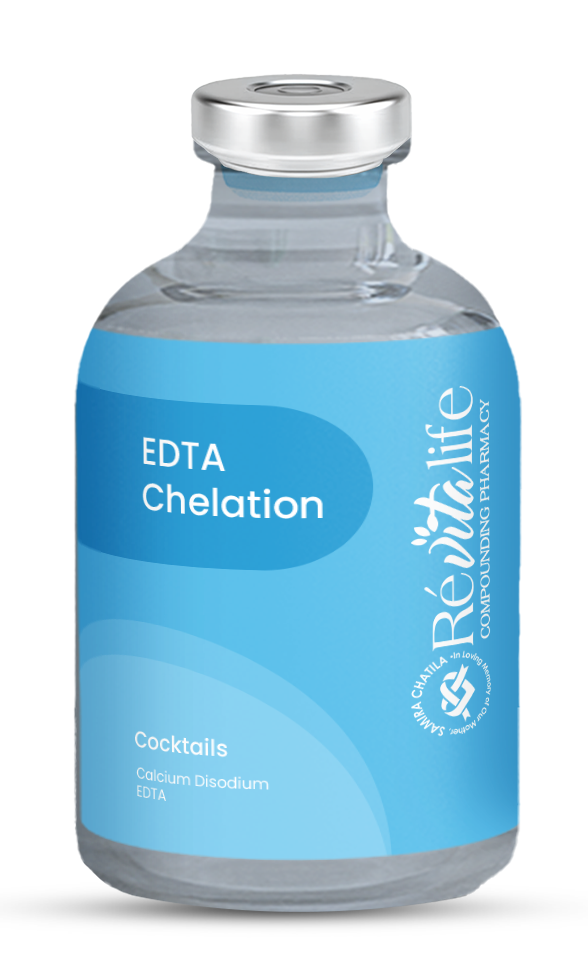
EDTA combined with Procaine, vitamins (C, B-complex), magnesium, and trace minerals intended for heavy-metal chelation under medical supervision.
Benefits
Chelates certain metals (lead, cadmium; limited evidence for others)
Supports antioxidant pathways
Mechanism of Action (MOA)
EDTA: binds divalent and trivalent metals for renal excretion.
Vitamin C +: Provides antioxidant support during chelation.
Procaine: Known for its chelating properties, aids in the removal of heavy metals from tissues and organs, supporting overall detoxification.
Side Effects
Low calcium levels (EDTA)
Kidney strain
Nausea, hypotension
Nephrotoxicity: Edetate CALCIUM disodium is potentially nephrotoxic. Renal tubular acidosis and fatal nephrosis may occur.
Contraindications
These intravenous infusions should not be administered to patients with:
Chronic renal insufficiency
Congestive heart failure
Atrial fibrillation, and known allergies on vitamins, minerals, and related substances. and other ingredients contained in the IV infusion bag.
This should not be administered to patients below 18 years old.
EDTA is contradicted for those who have active renal disease or anuria; hepatitis.
Pregnancy & breastfeeding.
Kidney disease
Hypocalcemia
Interactions
Increased renal clearance of some metals and minerals
Drug Interactions: Digoxin, diuretics, potassium-depleting medicines. If the patient is taking any medicine, check first for any possible drug interaction before use. Do not take alcohol, sleep aids, or tranquilizers of other CNS depressants.
EDTA x Chloramphenicol (Systemic): Myelosuppressive Agents may enhance the myelosuppressive effect of Chloramphenicol (Systemic).
EDTA x Cladribine: May enhance the myelosuppressive effect of Myelosuppressive Agents.
EDTA x Dipyrone: May enhance the adverse/toxic effect of Myelosuppressive Agents. Specifically, the risk for agranulocytosis and pancytopenia may be increased.
EDTA x BCG (Intravesical): Myelosuppressive Agents may diminish the therapeutic effect of BCG (Intravesical).
References (General Scientific Sources)
These are general categories of references typically supporting nutrient-based IV therapy mechanisms: