Available through:
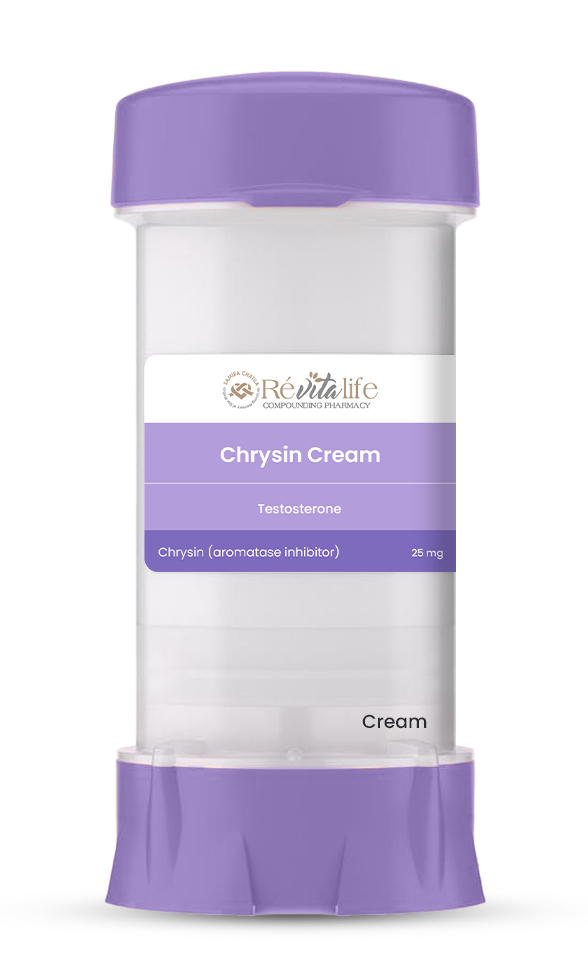
Chrysin Cream
Available Dosage Strengths
About Chrysin Cream
Chrysin compounded cream is a topical formulation containing the natural flavonoid chrysin, primarily used for its potential aromatase-inhibiting, anti-inflammatory, and antioxidant properties. Compounding pharmacies prepare these creams.
Chrysin is mainly used for men’s health benefits related to antioxidant properties, male infertility, prostate health, and potential testosterone-boosting effects.
Chrysin creams might help with hormonal balance: acting as a so-called “aromatase inhibitor” (i.e. reducing conversion of testosterone to estradiol). That is used as rationale to improve “male hormonal profile”
Mechanism(s) of Action
- Chrysin is a natural flavonoid (5,7-dihydroxyflavone) found in e.g. honey, propolis, certain plants. MDPI+2Skincare Lab+2
- Antioxidant effect: chrysin can scavenge free radicals (e.g. hydroxyl radicals), donate hydrogen atoms, stabilize the resulting radical by resonance — interrupting oxidative chain reactions that damage lipids, proteins, DNA. PMC+1
- Anti-inflammatory / immunomodulatory effects: chrysin has been shown to inhibit inflammatory mediators and pathways: suppressing enzymes like COX‑2, inhibiting activation of NF‑κB (a key transcription factor for inflammatory cytokines), reducing levels of pro-inflammatory cytokines (e.g. TNF-α, IL-1β) and down-regulating inflammatory signaling (e.g. p38 MAPK, STAT1, JAK-STAT). MDPI+2PubMed+2
- Skin-specific effects (topical potential): in skin cell studies, chrysin protected keratinocytes from UVA/UVB-induced damage — reducing reactive oxygen species (ROS), reducing apoptosis, reducing expression of COX-2, and restoring expression of water-channel protein Aquaporin‑3 (AQP-3). PubMed
- Possible effects on skin ageing, pigmentation and skin tone: some in vitro studies report that chrysin can increase collagen I secretion (which may support skin structure), reduce cellular senescence, and modestly inhibit melanogenesis (i.e. melanin synthesis) via suppressing tyrosinase (TYR) activity and down-regulating melanogenesis-related proteins. PubMed+1
In sum:
the hypothesized benefits of topical chrysin center on antioxidant, anti-inflammatory, and skin-protective effects — which might be helpful for reducing inflammation (e.g. dermatitis), protecting from photo-damage (UV), possibly modulating pigmentation or skin aging.
Side Effects / Contraindications
- For topical use (skin), data are limited but the general dermatology/skincare-industry view is that chrysin is generally well tolerated, low comedogenicity (i.e. unlikely to clog pores), and low risk of irritation for many userrs
- However possible reactions include mild skin irritation, redness, dryness, burning or tightness, especially if the cream lacks enough emollients or is combined with strong exfoliating agents / retinoids.
- As with any new topical, there’s a risk of allergic contact dermatitis, particularly in individuals sensitive to flavonoids or plant-derived extracts
References
- The review “Chrysin: A Comprehensive Review of Its Pharmacological Properties and Therapeutic Potential” — outlines antioxidant, anti-inflammatory, neuroprotective, vascular effects, but warns about low bioavailability and lack of human data.
- Study showing protection of keratinocytes from UVA/UVB damage by topical chrysin (reduction of ROS, COX-2, apoptosis; improved AQP-3) PubMed
- Study in a mouse model of psoriasis-like skin inflammation: topical chrysin reduced inflammation, suppressed NF-κB, MAPK, JAK-STAT signaling, and decreased inflammatory mediator release. PubMed
- In vitro work showing chrysin reduces melanogenesis (less melanin, less tyrosinase activity), increases collagen I secretion, and decreases markers of cellular senescence — suggesting anti-photoaging/pigmentation potential. PubMed+1
- Warnings/limitations: in vivo poor bioavailability (oral), lack of robust human clinical trials, uncertain efficacy as aromatase inhibitor in humans