Overview
LL-37 acts via disrupting the outer microbial membrane. LL-37 has reported activity against multiple Gram-positive and Gram-negative human pathogens, including E. Coli, Methicillin-resistant, Staph aureus (MRSA), lipopolysaccharide (LPS), viruses, and fungal infections (including Candida sp.).
In addition to LL-37’s direct antimicrobial activity, it also exerts an “alarmin” activity, which works as a multifunctional innate immune effector that recruits and activates inflammatory cells, including dendritic cells (DC) and monocytes.
LL-37 has been reported to have additional indirect immune-defensive roles, including:
- Immunomodulatory activity, mediating innate and adaptive immune response and including inflammation
- Chemotactic functions
- Modulates type 1 IFN responses
- Modulates TLR pathways
- Stimulates mast cell degranulation
- Promotes antimicrobial functions of neutrophils
- Modulates cell survival and apoptosis
- Enhances stem cell immunomodulatory activity
- Increases angiogenesis. Binds and neutralizes LPS Significant activity against Lyme disease and co-infections and is synergistic with other peptides and antibiotics
- Promotes reepithelialization, increases wound closure and healing
- Inhibits biofilm production
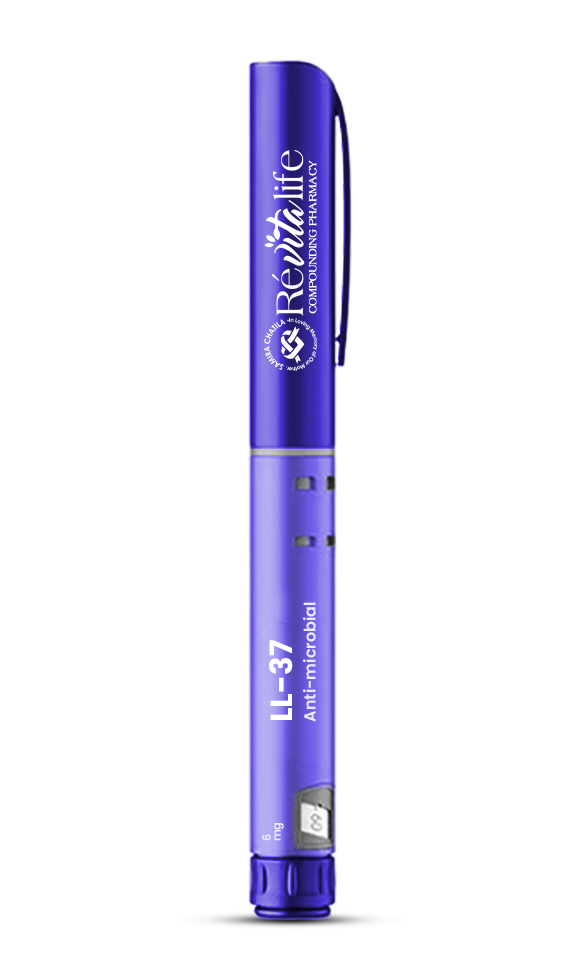
Indications/Uses
- Antimicrobial peptide
- Gram-positive and Gram-negative infections, including MRSA
- Antiviral, including HIV
- Antifungal – effective vs. Candida
- Mold/biotoxins (CIRS or chronic inflammatory response syndrome)
- Chronic wound healing
- Chronic venous leg ulcers
- Polymicrobial infected wounds
- GI inflammatory Conditions – IBDs
Other Uses
- Cancers limited to colon cancer, gastric cancer, hematologic malignancy and oral squamous cell carcinoma. LL-37 is reported to induce tumorigenic effects in cancers of the ovary, lung, breast, prostate, pancreas, as well as in malignant melanoma and skin squamous cell carcinomas
- Pulmonary issues
- COPD
- Respiratory Syncytial Virus (RSV)
Dosage
General Dosage:
Inject (200 mcg) SQ daily for 6-8 weeks.
Longer therapy may be necessary in some individuals.
As LL-37 is activated in the body by vitamin D, it is recommended to test patient’s 25-hydroxy vitamin D level, if < 50 ng/ml, recommend taking 5,000 IU (125mcg) vitamin D3 daily.
Warnings & Cautions
- LL-37 is reported safe in recommended dosages.
- Redness, pain and effusion may occur at site of injection
- Use LL-37 with caution in cancer and those prone to cancer.
- Depending on tumor biology, LL-37 may act either as a pro-tumorigenic or anti-cancer agent.
- Due to LL-37’s pro-inflammatory response in the innate immune system, LL-37 may propagate inflammatory signals, stimulate type I IFN production, and result in induction of autoimmune conditions.