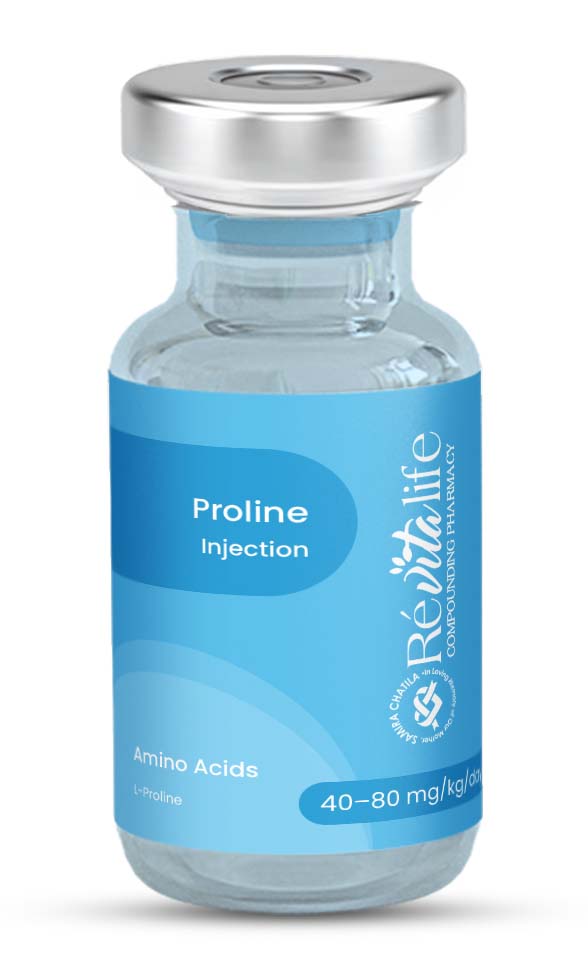
Phenylalanine Injection from RevitaLife Compounding Pharmacy

Available through:

Phenylalanine Injection

Available Dosage Strengths
L-Phenylalanine
12.5 mg/mL

Generic Name: L-Phenylalanine
Drug Class: Essential aromatic amino acid; component of parenteral amino acid solutions for nutrition.
Route of Administration: Intravenous (IV) only; administered as part of a balanced amino-acid mixture, never as a single amino-acid bolus.
Therapeutic Category: Parenteral Nutrition (PN) / Macronutrient
Primary Use:

  • Provides substrate for protein synthesis in patients unable to meet nutritional requirements enterally.
  • Precursor for tyrosine, dopamine, norepinephrine, epinephrine, and melanin.

IV phenylalanine is not administered as a stand-alone vial; it is included in commercial or compounded amino-acid solutions (e.g., 8.5%, 10%, 15% AA mixtures).

âš  Important: Exact dosing must be individualized based on metabolic status, liver function, renal function, and total PN prescription.

A. Typical Adult Requirements (in PN)

  • Phenylalanine requirement: ~ 25–40 mg/kg/day
    (usually provided within ~1–2 g/kg/day total amino acids depending on catabolic state).

C. Special Populations

  • Hepatic insufficiency: Lower phenylalanine doses may be required to prevent hyperphenylalaninemia.
  • Phenylketonuria (PKU): Contraindicated; phenylalanine must be severely restricted or excluded.
  • Burn/sepsis/trauma: Total amino-acid needs increase, but phenylalanine ratio remains within standard AA formulations.

Administration

  • Infuse via central venous line when osmolarity of full PN admixture is high.
  • Must be mixed with dextrose, electrolytes, vitamins, trace elements, and lipids as per PN regimen.
  • Do not administer undiluted or as bolus.

Phenylalanine serves multiple biochemical and metabolic functions:

A. Protein Synthesis

Essential amino acid used in ribosomal assembly of structural and enzymatic proteins.

B. Precursor for Tyrosine

Phenylalanine → (Phenylalanine hydroxylase + BH₄) → Tyrosine
Tyrosine is further used to produce:

  • Dopamine
  • Norepinephrine
  • Epinephrine
  • Thyroid hormones (via tyrosine-containing thyroglobulin)
  • Melanin

C. Contribution to Nitrogen Balance

Supports positive nitrogen balance in critically ill or malnourished patients.

D. Neurotransmitter Regulation

Through catecholamine synthesis, phenylalanine indirectly influences cognitive function, alertness, and autonomic regulation.
Absolute Contraindications

  1. Phenylketonuria (PKU) – risk of neurotoxicity from elevated phenylalanine levels.
  2. Severe hepatic failure with impaired phenylalanine metabolism.
  3. Hypersensitivity to amino-acid formulations (rare).

Relative Contraindications / Precautions

  • Renal impairment: Adjust overall amino-acid load; monitor urea nitrogen.
  • Inborn errors of amino-acid metabolism (other than PKU).
  • Acidosis or alkalosis: Electrolyte and metabolic correction may be required.
  • Refeeding syndrome risk: Initiate PN slowly in severely malnourished patients.
  • Hyperosmolar states: Central venous access recommended for hypertonic PN.
  • Excessive phenylalanine → neurotoxicity (encephalopathy, irritability, lethargy).
  • Liver disease: Monitor plasma amino-acid profile if available.

Monitoring Requirements:

  • Plasma amino-acid levels (when indicated).
  • Serum electrolytes, liver function tests, renal panel.
  • Triglycerides (if lipids co-administered).
  • Blood glucose.

Nitrogen balance.

Drug Interactions

  1. Levodopa: High phenylalanine competes for transport across the blood–brain barrier, reducing levodopa efficacy.
  2. MAO inhibitors: Increased catecholamine precursor load may potentiate hypertensive reactions.
  3. Antipsychotics: May alter dopamine synthesis indirectly.
  4. Thyroid medications: Tyrosine pathway influences thyroid hormone synthesis.

Nutrient/Nutritional Interactions

  • Tyrosine: Phenylalanine increases endogenous tyrosine production; may reduce external tyrosine requirements.
  • Large neutral amino acids (LNAAs): Compete for BBB transport; imbalance can affect neurotransmitter levels.
  • Other PN components: Stability interactions with calcium, magnesium, or lipids depend on full admixture.

Common (generally due to PN mixture, not phenylalanine alone):

  • Nausea
  • Vomiting
  • Headache
  • Mild infusion reactions
  • Elevated BUN from high nitrogen load

Metabolic Effects Specific to Phenylalanine:

  • Hyperphenylalaninemia
  • Neurotoxicity (confusion, irritability, tremors)
  • Amino-acid imbalance leading to altered neurotransmitter synthesis
  • Hyperammonemia (indirectly via hepatic stress)

Severe (rare):

  • Anaphylactoid reactions to amino-acid solution
  • Hepatic dysfunction (with long-term, high-dose PN)

Metabolic acidosis if PN not balanced correctly

Pregnancy

  • Phenylalanine is an essential nutrient for fetal development.
  • Safe as part of medically supervised PN when indicated.
  • Avoid in maternal PKU due to risk of maternal PKU syndrome (microcephaly, developmental delay, congenital heart defects from high maternal phenylalanine levels).

Breastfeeding

  • Compatible when administered as part of PN.
  • Does not accumulate significantly in breast milk when maternal plasma levels remain normal.
  • Mothers with PKU must maintain low-phenylalanine levels to avoid high phenylalanine in breast milk.

For Commercial Amino-Acid Solutions Containing Phenylalanine:

  • Temperature: Store at 20–25°C (68–77°F); avoid freezing.
  • Protection: Keep in original container; protect from excessive heat and light.
  • Do not use if:
    • solution is cloudy
    • contains precipitates
    • container is damaged or leaking
  • Use aseptic technique when adding to PN admixtures.
  • Follow institutional policy for beyond-use dating of compounded PN.

(Professional medical sources – no URLs)

  1. ASPEN Guidelines for Parenteral Nutrition Administration. American Society for Parenteral and Enteral Nutrition.
  2. ESPEN Guidelines on Parenteral Nutrition, European Society for Clinical Nutrition and Metabolism.
  3. Nelson DL, Cox MM. Lehninger Principles of Biochemistry, Amino Acid Metabolism chapter.
  4. S. Pharmacopeia (USP) Monographs: Amino Acid Injections.
  5. FAO/WHO/UNU Expert Consultation: Protein and Amino Acid Requirements in Human Nutrition.
  6. Dickerson RN. Amino Acids in Critical Illness and Parenteral Nutrition.
  7. Clinical nutrition manuals used in hospital PN compounding standards.

Related Medications

Get in Touch

Contact Us To Get Better Information

Scroll to Top