Available through:
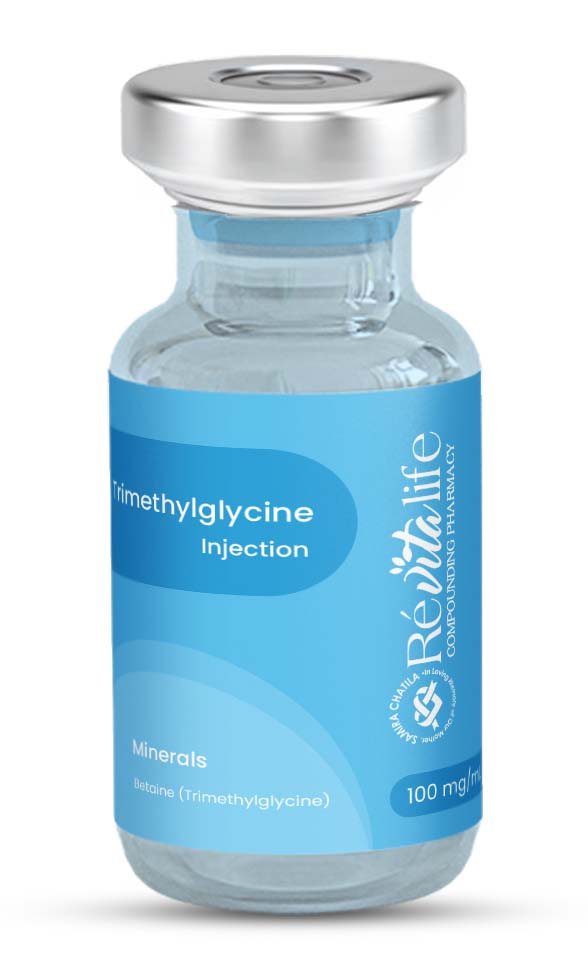
Trimethylglycine Injection
Available Dosage Strengths
About Trimethyl glycine Injection
Generic Name: Trimethyl glycine (TMG) / Betaine
Chemical Class: Methylated derivative of glycine; organic osmolyte; methyl-group donor.
Physiological Role:
- Key Osmo protectant in cells
- Major participant in methylation reactions
- Converts homocysteine → methionine via betaine-homocysteine methyltransferase
- Supports detoxification, liver function, and cellular hydration
Route of Administration:
- Primarily oral.
- IV use is non-standard and typically restricted to:
- Research settings
- Specialized metabolic disorders
- Compounded preparations in metabolic crises (rare)
Clinical Uses (Oral Standard):
- Treatment of homocystinuria (FDA-approved)
- Supportive therapy for fatty liver and methylation deficits
- Experimental uses in mitochondrial and metabolic disorders
Clinical Uses (IV — Experimental or Rare):
- Severe metabolic crises where oral administration is impossible
- Acute lowering of dangerously high homocysteine (non-routine)
- Osmotherapy or hepatic metabolic support (investigational)
Dosage
⚠ No standard or FDA-approved IV dosage exists.
The following information is extrapolated from pharmacology data and metabolic requirements.
A. Adult IV Dosage (Experimental/Literature-Supported)
- 100–300 mg/kg/day IV, divided in continuous infusion
- Typically dissolved in sterile solution and infused over 4–12 hours
- Adjustments based on serum homocysteine and methylation markers
B. Oral-to-IV Conversion Considerations
Oral betaine doses for homocystinuria:
- 6–12 g/day
IV dosing (if considered) attempts to mirror bioavailability, thus:
- 6–10 g/day IV infusion would approximate therapeutic methylation support.
C. Administration
- Must be compounded under sterile conditions
- Infuse via peripheral or central IV line depending on osmolarity
- Avoid bolus administration
- Continuous monitoring required
MECHANISMS OF ACTION
A. Methyl Group Donor (Primary Mechanism)
Betaine → donates a methyl group →
Homocysteine → Methionine
(via betaine-homocysteine methyltransferase)
This leads to:
- Reduction in plasma homocysteine
- Increased methionine and S-adenosylmethionine (SAMe)
- Improved methylation capacity for DNA, RNA, proteins, lipids, neurotransmitters
B. Osmoprotectant / Cellular Hydration
Betaine acts as a compatible osmolyte:
- Protects cells during dehydration
- Maintains cellular volume
- Stabilizes proteins and enzymes
- Protects mitochondria against osmotic and oxidative stress
C. Hepatic Function Support
- Enhances fat metabolism
- Supports phosphatidylcholine synthesis via methylation
- Reduces hepatic steatosis (non-alcoholic fatty liver disease clinical use orally)
D. Glycine Derivative for Metabolic Pathways
Betaine indirectly contributes to:
- Creatine synthesis
- Carnitine synthesis
- Detoxification pathways
- Neurotransmitter formation
E. Impact on Mitochondrial Efficiency
Betaine improves:
- Mitochondrial respiration
- Oxidative stress resilience
- ATP generation (indirectly via methylation pathways)
Contraindications & Precautions
Absolute Contraindications
- Known hypersensitivity to betaine or components
- Severe renal impairment with risk of accumulation
- Hyper-methioninemia (>1000 µmol/L) – betaine increases methionine levels
- Homocystinuria with existing cerebral edema
- High methionine can worsen edema
Relative Contraindications
- Severe hepatic impairment (risk of methionine accumulation)
- Uncontrolled cardiovascular disease (rapid methylation shifts can alter lipid levels)
- Psychiatric disorders (methylation changes influence neurotransmitters)
- Pregnancy (high methylation burden may be harmful—use cautiously IV)
Monitoring
Mandatory when using IV betaine:
- Serum homocysteine
- Plasma methionine levels
- Liver function tests
- Renal function
- Serum electrolytes
- CNS monitoring (increased methionine → brain edema risk)
SAMe / SAH ratios if available
Interactions
Drug Interactions
- Methionine supplementation → excessive methionine accumulation
- Serotonergic agents / antidepressants:
- Changes in methylation can alter neurotransmitter metabolism
- Valproic acid:
- Can increase homocysteine; betaine may counteract but must be monitored
- Folate and B12 therapy:
- Strong synergistic homocysteine-lowering effect
- Choline or phosphatidylcholine supplements:
- Additive methylation effects
Nutritional Interactions
- Low folate/B12 levels reduce betaine efficacy
- Excessive protein intake raises homocysteine burden
- TMG interacts with osmotic balance, so electrolyte monitoring is crucial
Adverse Reactions / Side Effects
Common
- Gastrointestinal discomfort (less relevant IV)
- Headache
- Mild hypotension
- Sweating or warmth during infusion
- Body odor (“fishy smell”) from methylamine metabolites
Metabolic
- Elevated methionine levels (most important risk)
- Possible neurological symptoms if methionine >1000 µmol/L
- Electrolyte disturbances (due to osmotic effects)
- Altered lipid profiles
Serious
- Cerebral edema (high methionine—rare but serious)
- Seizures (secondary to metabolic imbalance)
- Cardiac arrhythmias (electrolyte shifts)
- Hepatic strain in chronic use
Overdose
- Severe hypermethioninemia
- CNS toxicity
- Osmotic demyelination risk if infused too rapidly
Pregnancy & Breastfeeding
Pregnancy
- Oral betaine classification: Generally safe when necessary
- IV use is not recommended, due to:
- Lack of safety data
- Potential methionine elevation
- Unknown fetal methylation impacts
Use only if benefit outweighs risk in severe metabolic cases.
Breastfeeding
- No evidence of harm at nutritional doses
- Unknown transfer via IV administration
Monitor infant for irritability or feeding issues if maternal metabolic levels are high
Storage
For compounded IV betaine solutions:
- Temperature: 20–25°C (68–77°F)
- Protect from moisture; hygroscopic compound
- Store in airtight containers
- Protect from light (recommended)
- Use sterile technique for preparation
- Shelf life depends on compounding pharmacy standards (typically < 7 days refrigerated)
- Inspect for:
- Precipitates
- Cloudiness
- Discoloration
- Particulate matter
Do not use if solution integrity is compromised.
References
(Professional clinical sources—no URLs)
- FDA Label: Betaine Anhydrous for Homocystinuria – Prescribing Information.
- S. Pharmacopeia (USP) – Monographs for Betaine.
- Mudd SH et al. Disorders of Transsulfuration and Methylation. Metabolic Textbook.
- Clinical Pharmacology of Betaine and Methyl Group Donors – Peer Review Articles.
- ASPEN: Guidelines for Specialized Nutrition Support in Metabolic Disorders.
- Medical Biochemistry: Methylation Cycle & Betaine-Homocysteine Methyltransferase.
- Hepatic Metabolism Texts – Role of Betaine in Fatty Liver and Methionine Pathways.